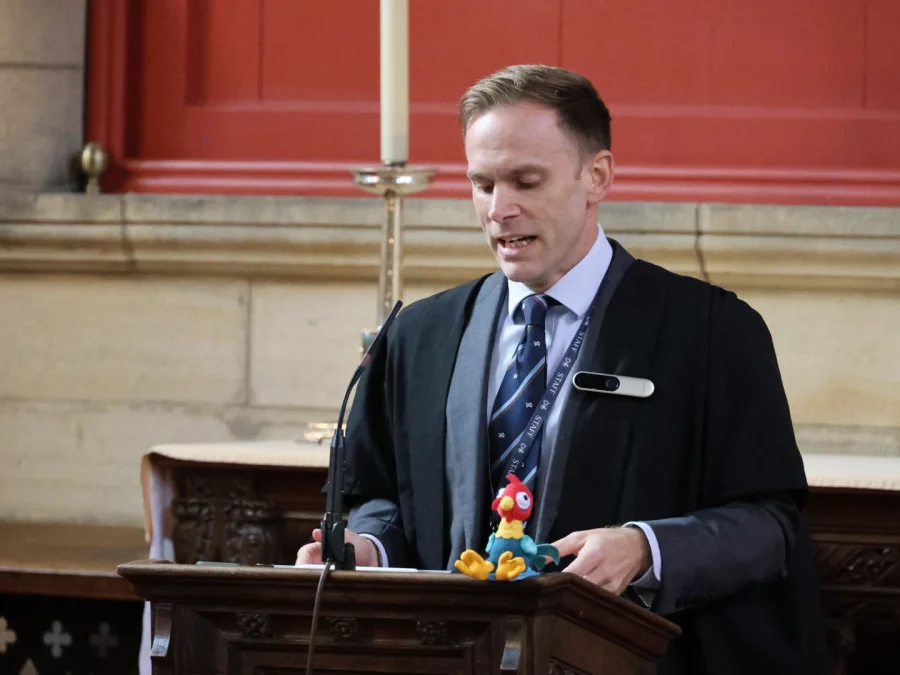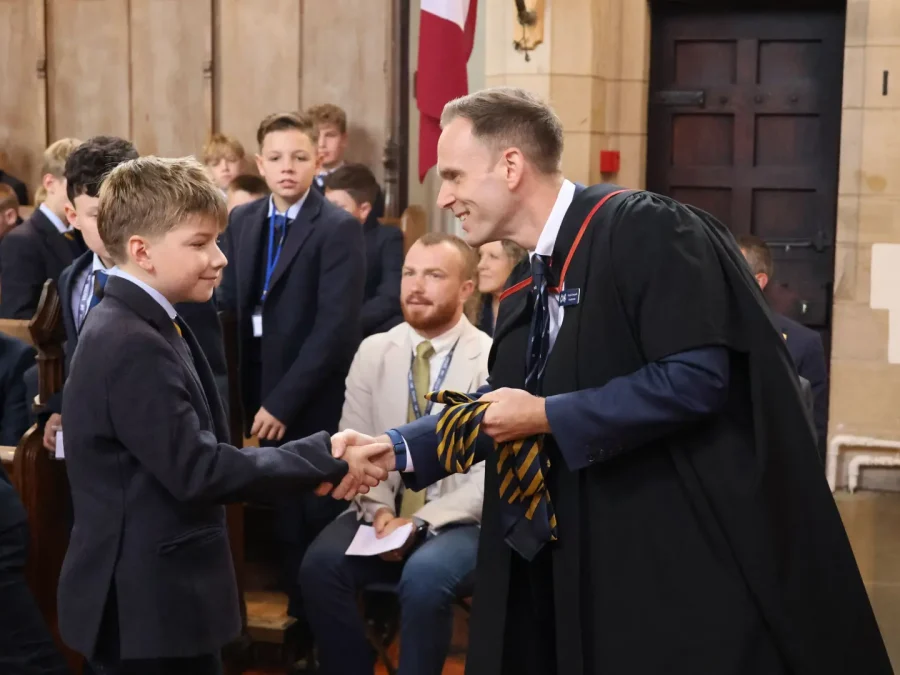


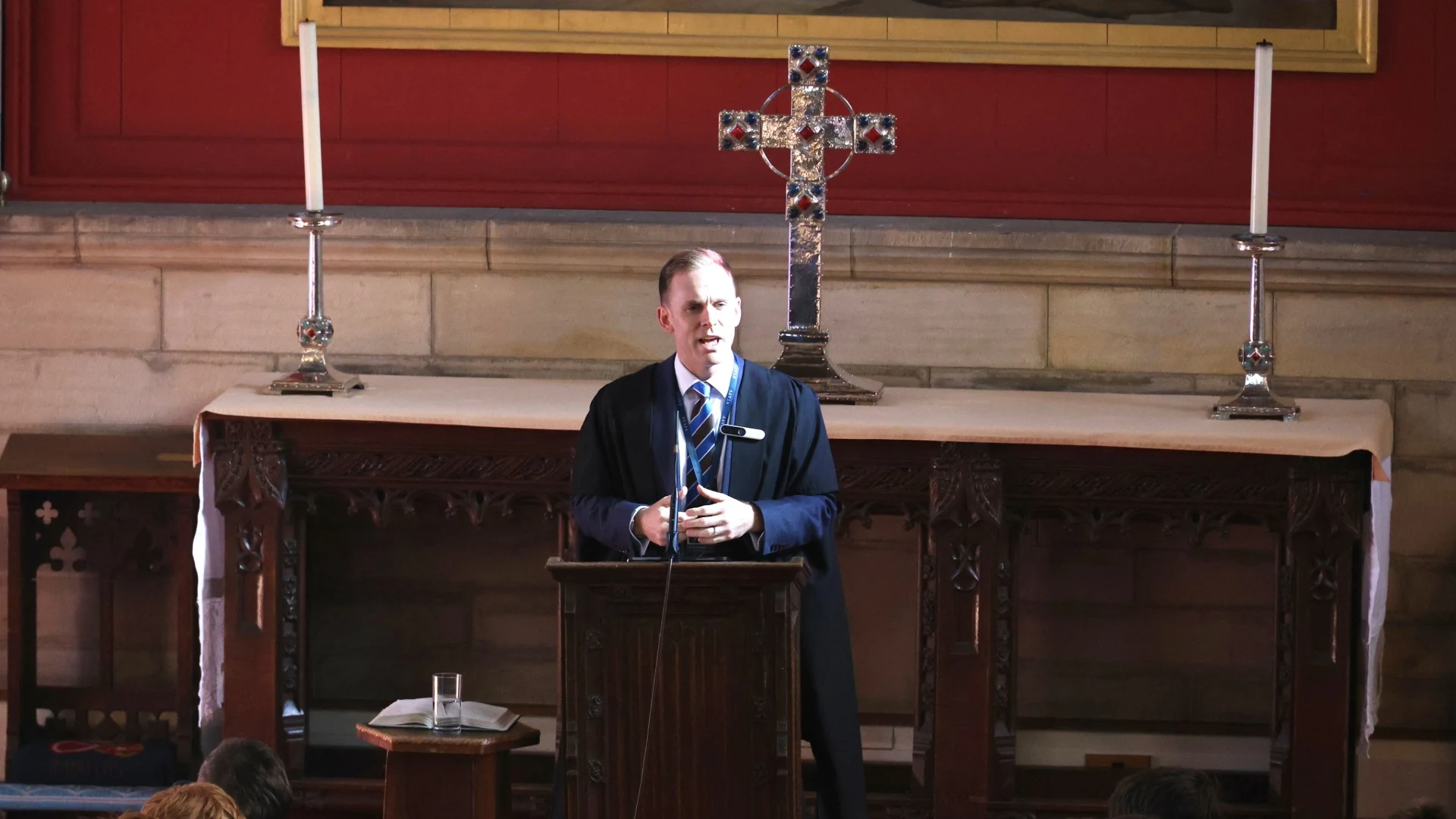
In this week’s Headmaster’s Assembly, pupils were encouraged to think carefully about the role art plays in helping society understand itself. Reflecting on the 2026 Venice Biennale, one of the world’s most significant contemporary art events, the Headmaster explored how creativity, politics, and global events often become deeply connected.
The address challenged pupils to consider how schools should prepare young people not simply to absorb information, but to engage thoughtfully with complexity, disagreement, and uncertainty in the modern world. Here is the address in full:
Many of you will know the World Cup. Some of you will know Eurovision. Fewer of you will know the Venice Biennale but in the art world, it is one of the most important international events on Earth.
Every two years, countries from around the world gather in Venice, in Italy, to showcase contemporary art. Each nation has its own pavilion, almost like an Olympic village for ideas. Artists create installations, sculptures, films, and performances which try to capture something about the world we live in.
Some works are beautiful, some are confusing, some are provocative, some are deeply political. And this year, perhaps more than ever, the Biennale has become a mirror of the geopolitical faultlines running through our world.
This year, arguments erupted over whether Russia and Israel should be included because of ongoing wars and accusations of war crimes connected to conflicts in Ukraine and Gaza. Some artists protested. Some pavilions closed in solidarity. The entire international jury resigned.
In other words, what began as an art exhibition became a global argument about morality, politics, freedom, and responsibility. And perhaps that should not surprise us. Because art has never simply been decoration.
Picasso painted Guernica after the bombing of civilians during the Spanish Civil War. Protest songs shaped the civil rights movement. Novels exposed injustice. Theatre challenged dictatorships. Photography changed how people understood war.
Art often becomes the language people use when ordinary political conversation breaks down. But what is particularly interesting about this year’s Venice Biennale is not only the controversy surrounding it, but the mood of the art itself.
Much of the work is quieter, more uncertain, more reflective. It reflects a generation growing up in a world shaped by war, climate anxiety, political division, and constant digital noise. Rather than pretending to have all the answers, many artists seem to be asking how we live thoughtfully in uncertain times.
One of the challenges of modern life is that difficult issues quickly become tribal. People feel pressure to pick a side instantly. Social media rewards outrage more than understanding. But schools, and especially Sixth Forms, should be places where we learn something more demanding: how to sit with complexity.
Perhaps maturity is not always about having immediate answers. Sometimes it is about learning how to ask better questions. The Venice Biennale matters not because everyone agrees, but because it creates a space where difficult questions can still be asked publicly.
- Can culture ever be separated from politics?
- Should artists represent nations?
- Should art challenge us or comfort us?
- Can creativity build empathy across disagreement?
These are not easy questions. Mature societies do not avoid difficult conversations. They learn how to have them. At Barney, we speak often about Community, Character, and Ambition.
Part of character is learning to engage thoughtfully with the world beyond ourselves. Part of ambition is intellectual ambition, being willing to wrestle with difficult ideas rather than settling for easy slogans. And part of community is recognising that human beings often understand each other not only through politics or statistics, but through stories, music, paintings, films, and art.
The Venice Biennale this year reminds us that art is not separate from the world. It is one of the ways the world tries to understand itself.